

If you’re anything like me, you’ve probably come across “ARTEX” a few hundred times over the past month. You’ve probably also felt the uptick and acceleration in attacks. So what is it, at a granular level? Are we ‘cooked’? Is it all connected? What has ARTEX’s impact been beyond the FUD? What are its telltale signs and behavioral patterns? Is this the turning point everyone has been warning about? And why is the FBI issuing a FLASH about it?
In this report, we’ll answer those questions + cover detection + hunting opportunities, IOCs, ARTEX forks and similar tools, the timeline and what it means for the industry.
Much of this report draws on real incidents and customer telemetry from the research of Unit 42, Google GTIG/Mandiant, CrowdStrike, Wiz, AWS, Microsoft, Datadog and Check Point, plus guidance from various CERTs and the FBI. Together, their research gives us a window into what’s happening on the frontlines.
That said, there’s A LOT more going on behind the scenes that we may only hear about later, if at all.
Heads up for security leaders reading this: Gadi Evron is moderating CSA’s ARTEX huddle tomorrow, November 17, at 10 a.m. CT, with leaders from Google, Dropbox, Salesforce, and Perplexity.
Now, let’s dive in!
TL;DR
ARTEX is an agent harness, not a language model. You connect a model such as GLM or Claude. ARTEX supplies instructions and tools, runs the model’s tool calls and feeds results back so it can choose the next action.
Threat actors (TAs) can use agents to test multiple targets and pursue several attack paths at once (concurrency). The cases below show how little time some defenders have to detect + contain.
Closing the original repository did not remove the forks. Cloudflare describes an ecosystem exceeding 12,000 repositories and maps 204 public forks with their own code changes. Responders have encountered ARTEX-derived frameworks in intrusions.
Check Point estimated $145 to $1,500 in model usage across reconstructed campaigns. One crypto-theft campaign moved no money; other operations stole data. Model spend is not the full cost of an attack.
Assign asset and patching owners. Revoke exposed credentials, restrict application permissions and automate containment when teams understand the action and its impact.
Malware Must Die, Theori and Cisco Talos publish detection rules. Validate and tune them. IPs, domains and tool markers can change quickly; correlate them with behavior before acting.
Three cases show how quickly these attacks can progress:
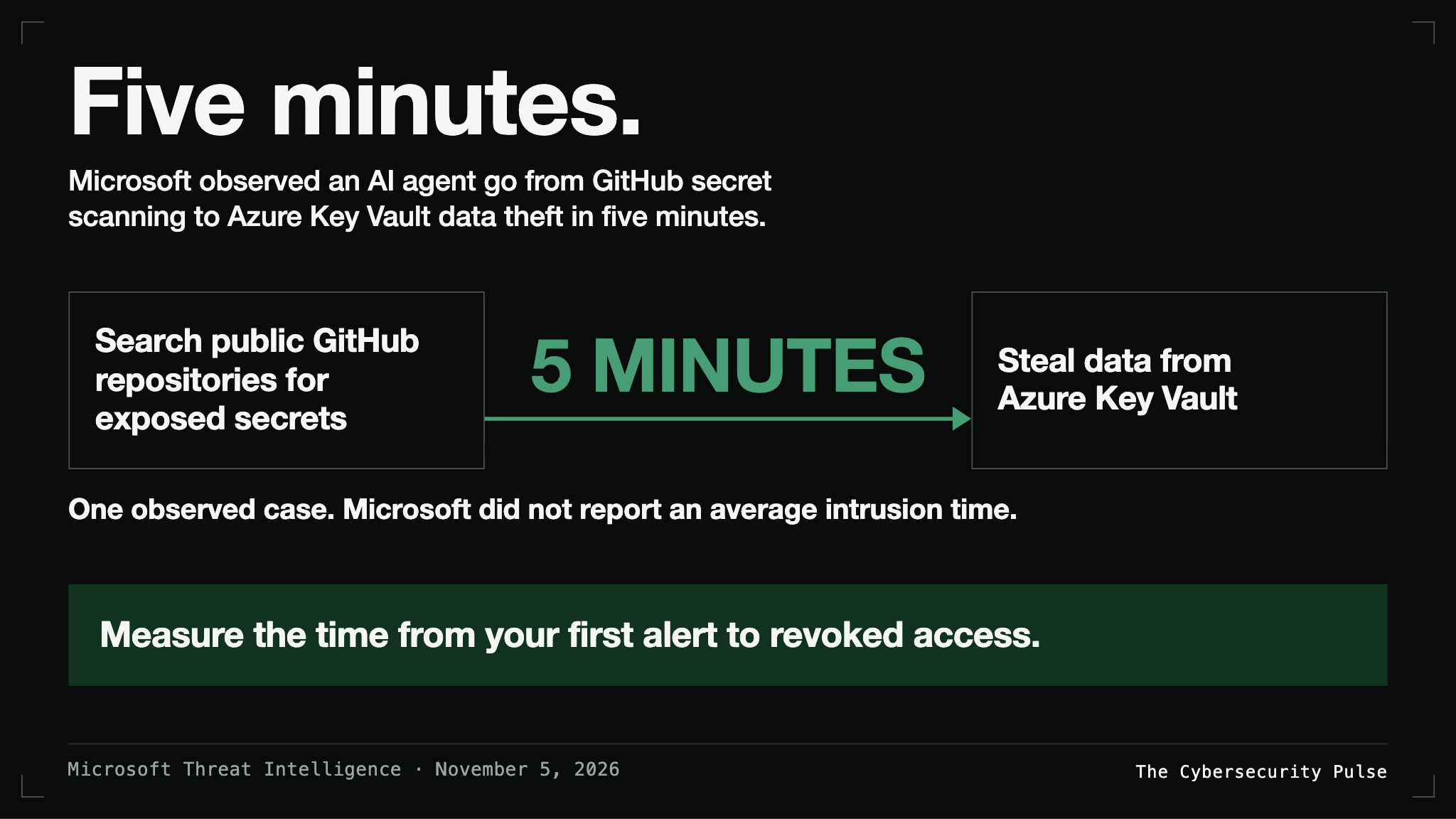
12 minutes: initial access to root, the highest level of system access, in the DIVD breach.
15 minutes: first compromised account to deep system access, in one Wiz investigation described by Google. Around four hours was typical in that campaign.
What the FBI and security researchers recommend
I’ve condensed guidance and findings from the FBI, CERT-EU, CERT-In, Microsoft, CrowdStrike, Palo Alto Networks, AWS and Datadog into the actions below and added implementation detail. Each item links to its sources.
These campaigns target exposed systems and usable credentials. Agents let TAs test both continuously and across multiple targets.
Name who owns each asset and who patches it, from deployment through retirement.
Keep an inventory of internet-facing applications, APIs, partner portals, employee tools, staging systems and legacy services. Record who maintains each one, who fixes vulnerabilities and who removes it when the organization no longer needs it. Restrict management interfaces to approved access paths. Set patching deadlines and verify fixes. The FBI leads with external inventory; CERT-EU, CERT-In and CrowdStrike emphasize patching exposed assets.
Revoke exposed credentials and investigate who used them.
Deleting a commit does not invalidate a key. Rotate or revoke exposed secrets, check their historical use and replace long-lived credentials with managed identities or short-lived credentials where your systems support them. If a compromised identity could read a secrets store, investigate and rotate any credentials it may have taken. Include LLM API keys and credentials for model gateways and inference endpoints. Microsoft details the credential response; AWS calls for applying production security controls to AI services and monitoring unusual usage or spend.
Review application identities and their permissions.
A service principal is the identity an application uses to authenticate. Review its sign-ins, added credentials, permissions and subsequent data access, including integrations your organization no longer uses. Remove unnecessary grants and investigate unexpected credential or privilege changes. MFA protects human sign-ins; it does not secure app-only authentication by itself. FBI, Microsoft.
Fix authentication, authorization and transaction controls on public endpoints.
Prioritize fixing SQL injection, unsafe file uploads, SSRF (making a server send requests on a threat actor’s behalf) and IDOR (accessing another user’s records by changing an identifier). Validate SAML and JWT signatures. Protect registration and password-reset flows against abuse. Separate staging from production credentials and access. For payment APIs, enforce server-side validation, signed requests, transfer limits and approval controls. Unit 42, CrowdStrike, CERT-In.
Restrict access to internal documentation, debug output and secrets.
Protect internal API specifications, sensitive source maps and configuration secrets. Keep detailed errors in internal logs. Endpoints you document publicly still need authentication and authorization. Unit 42, FBI.
Automate containment for well-defined, high-confidence detections.
CERT-In explicitly recommends automated, SOAR-based containment. SOAR runs predefined response workflows. Cisco Talos calls for procedures to revoke credentials, disable suspicious applications and isolate affected systems. Define what triggers each playbook, limit its permissions, check what the action could disrupt, and test the action and recovery procedure. Verify the action actually stops access: removing a secret does not necessarily invalidate already-issued tokens. Preserve evidence and escalate actions with uncertain business impact.
Determine which accounts, systems and data the TA accessed.
Correlate application requests, identity events, permission changes and data access. Datadog recommends hunting for permission-denied bursts, unusual credential use and cloud enumeration. Microsoft provides identity and cloud hunting guidance. Include unexpected LLM API calls from servers. Establish whether an attempt failed, obtained access or reached sensitive data.
Restrict your own testing agents’ access. Test decoys in a controlled environment.
CERT-EU warns that ARTEX’s stated scope is not a hard technical boundary. Enforce target restrictions with network controls and narrowly scoped credentials. Document authorized targets and tell the SOC when testing runs. Microsoft and CERT-In also recommend decoys and honeypots. Test whether they produce useful alerts or divert attacks in your environment.
The deep dive
Who built ARTEX, and what happened to the repo?
The creator uses the GitHub handle Autumn-27. Their GitHub profile also lists ScopeSentry, an asset-discovery and vulnerability-scanning project. I couldn’t verify their real name.
In their October 8 statement, the creator said they intended ARTEX for authorized testing and denied involvement in the attacks. They announced that they would move development to closed source and stop public releases and maintenance.
ThreatBook’s October 16 announcement says ARTEX began as a personal project by RedAgents’ product lead. It says the open-source edition won Baidu’s Agent+ challenge on September 3, and acknowledges that it lacked built-in security controls. RedAgents includes Artex Pro, a proprietary enterprise edition, alongside other testing agents. ThreatBook advertises authorization controls, scoped testing and traceable results.
ThreatBook announced the commercial edition eight days after the creator ended public releases. Its announcement promises tighter controls but does not explain how it enforces the customer’s authorized scope.
The forks keep the code in circulation
Closing the original repository did not remove existing copies or stop others modifying them. Cloudflare describes more than 12,000 repositories in the ecosystem; its fork tree maps 204 public repositories with their own code changes. Those are software repositories, not a count of threat actors or victims.
Cloudflare’s incident responders have encountered both ARTEX and ARTEX-derived frameworks. AntiFox is one such fork: its maintainer documents its origin as an ARTEX v0.1.1 fork. Arctic Wolf associated AntiFox interfaces with infrastructure used in intrusions involving IIS webshells and stolen AWS credentials. Successful cloud actions included reading a production secret and accessing S3 data.
Maintainers can rename a fork, rewrite its prompts, change its tools and replace recognizable strings. Some preserve or translate the original; others extend it. Researchers can use forks for legitimate testing. The reports do not estimate what share of attacks use forks. Rules that match only one tool name can miss a renamed fork.
How ARTEX works
ARTEX is an agent harness, not a language model like GLM or Claude. You connect a model. ARTEX gives it instructions and tools, executes the tool calls it requests, records the results and feeds those results back for the next decision.
ARTEX includes agent instructions, reusable skills, tool integrations, a task scheduler and a database of findings and progress. Skills provide task instructions and supporting resources. The files and systems an agent can access form its working environment; the harness manages how it uses tools to reach them.
What does ARTEX stand for? I could not verify an official expansion in the creator’s statement or preserved documentation.
The preserved repository and English-language fork documentation show these components. Forks can differ; this describes the public code, not Artex Pro.
Go backend (
cmd/artex,server/) - runs the service. Its scheduling engine coordinates tasks, planning and concurrent workers.Next.js console (
web/) - lets you set goals, manage tasks and inspect findings and traffic.Agents (
agent/) and the Norma SDK - a planner assigns work; workers execute it. Norma supplies agent, tool and session capabilities.PostgreSQL (
db/) - stores an asset graph of discovered systems and an exploration graph of attempted actions, findings and progress.Prompts, skills (
skills/) and tools - prompts and skills guide the agents. The agents invoke programs and scripts to perform actions. Researchers observed Nmap, curl, Python clients and Playwright.Traffic recording (
traffic/) and extensions - records requests for review and supports additional tools through Model Context Protocol (MCP) integrations.
The planner reads findings and assigns work. Workers run tools, record results and feed them back into the next decision. Multiple workers can operate at once, and a human can intervene. Censys describes this architecture in detail.
TAs choose which model ARTEX uses. The FBI and Check Point found DeepSeek Flash models most often in the ARTEX instances they linked to TAs. Researchers also saw Kimi and GLM; Zscaler saw Grok. TAs can run ARTEX with a paid model API; they do not need an open-weight model.
Telling an agent to stay in scope does not, by itself, block network requests outside that scope. ARTEX has scope settings and an approval mechanism, but CERT-EU warns that there is no hard technical enforcement. An independent audit of one fork found a scope check when results enter the knowledge graph, rather than before a tool accesses the network. Zscaler found a TA simply telling the model that every target was authorized.
Google/Mandiant compares its adoption to Cobalt Strike and Metasploit: legitimate security tools that TAs also use. Cisco Talos says ARTEX does not natively bundle a traditional command-and-control framework; TAs can add other tools.
How we got here
ARTEX went from public release on July 26 to an FBI alert on November 13: 110 days. Its creator stopped public releases citing abuse; eight days later, ThreatBook announced a commercial edition. Copies and modified forks kept circulating.
November 2025: the earlier warning. Anthropic disclosed that a Chinese state-sponsored group had jailbroken Claude Code and used it against roughly 30 targets. This predates ARTEX and concerns a separate operation.
July 26 to September: release and threat actor adoption. ARTEX appears on GitHub. The earliest TA prompts Zscaler recovered date to August 4. Google dates adoption by extortion and suspected espionage TAs to late August; Microsoft dates Storm-0940’s first use to September. On September 21, a TA breaches DIVD, the Dutch vulnerability disclosure nonprofit, through two previously unknown flaws in Zammad. DIVD later confirms the TA used ARTEX.
October 2 to 16: Korean breaches, repo closure, commercial announcement. Korean press and researchers connect financial-sector breaches to ARTEX. CrowdStrike publishes on October 7. Autumn-27 announces the end of public releases the next day. Korea’s financial regulator counts 16 affected firms and about 100,000 customer records across the reported incidents. On October 16, ThreatBook announces RedAgents with Artex Pro.
October 17 to November 13: more campaigns and official warnings. VAPOR PANDA begins its global campaign. Microsoft connects Storm-0940 to the ConnectWise compromise. A researcher’s ARTEX test accesses a WorkOS internal tool without authorization. Seoul police announce seven arrests. Microsoft reports use by two North Korean groups and a Cambodia-based crime cluster. Google, Check Point, Censys, Unit 42, Cloudflare, Amazon and Cisco Talos publish further research. CERT-EU and CERT-In issue warnings, followed by the FBI on November 13.
Who’s using it
These reports cover different threat actors and campaigns. Sharing a framework does not mean those TAs work together.
The TA targeting Korean banks.
Recorded Future calls it TAG-217. It exploited SQL injection and login bypasses in peripheral applications, according to Zscaler, and stole data on about 67,000 people. CrowdStrike assesses with moderate confidence that the TA is Chinese-speaking and financially motivated. Exposed session logs included Claude Code conversations about where to sell Korean data. That figure covers this campaign; the regulator’s total covers multiple incidents.
Storm-0940.
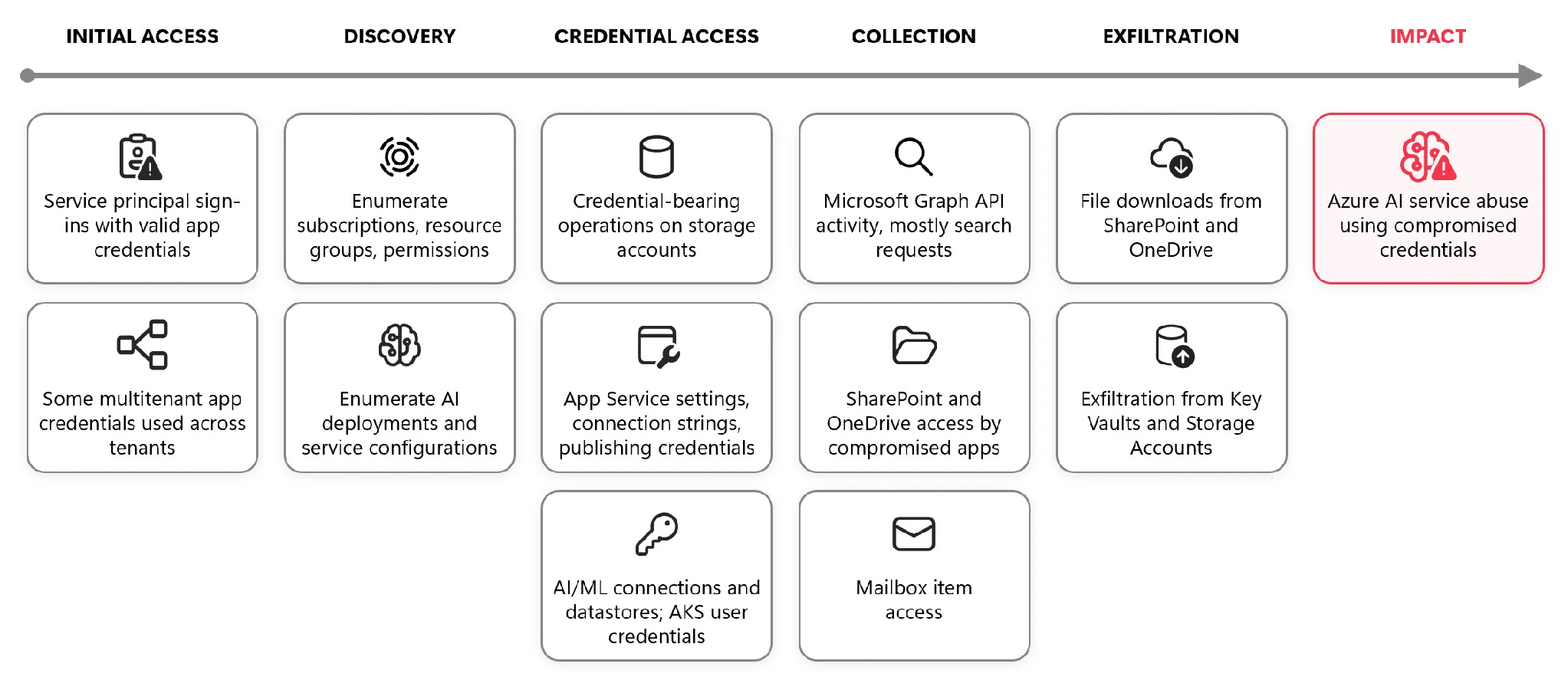
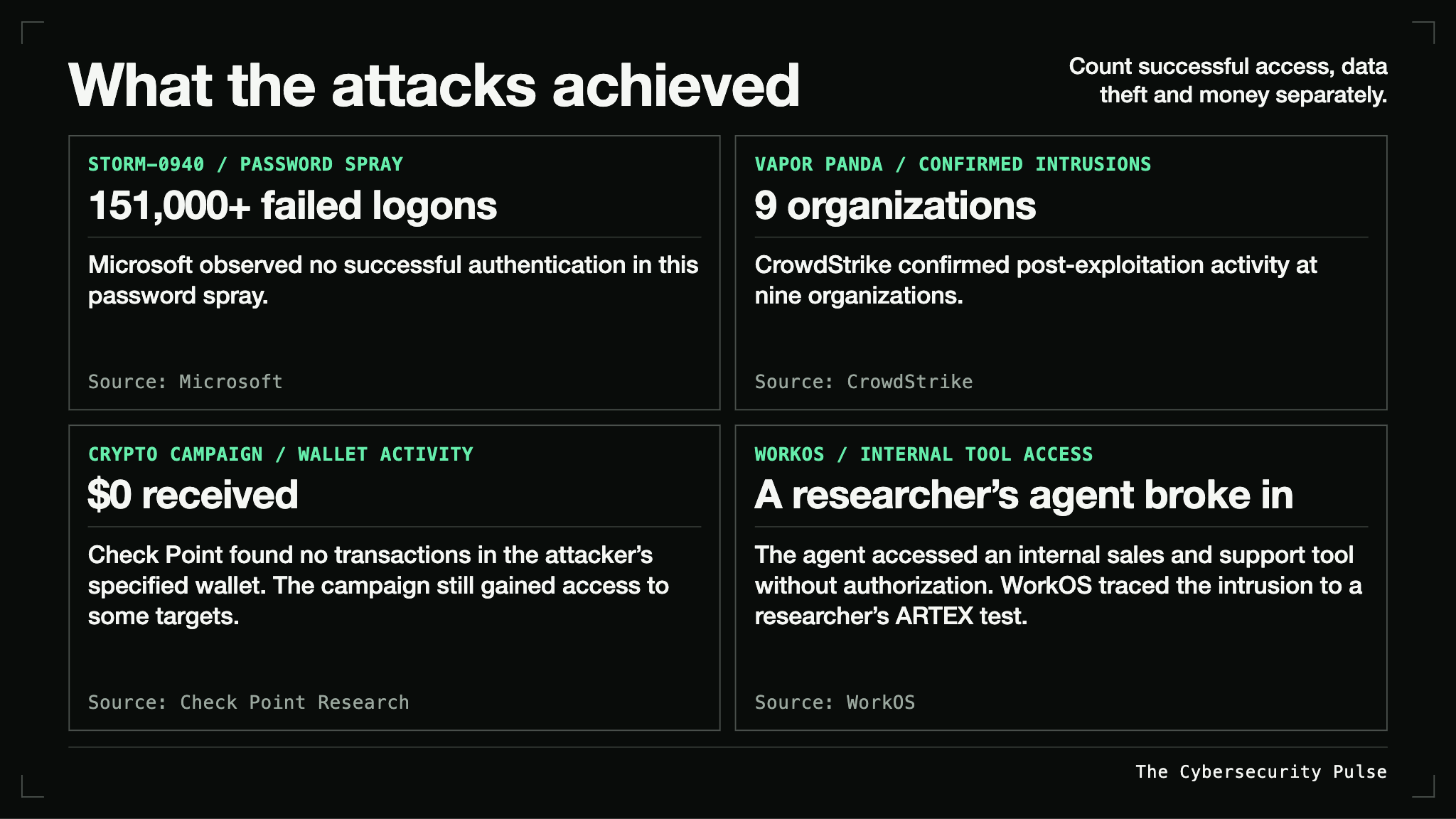
China state-aligned, according to Microsoft. After compromising application identities behind ConnectWise’s cloud backup product, it used ARTEX to attempt sign-ins at more than 2,250 customer tenants. Microsoft says most targeting failed, but the group established privileged persistence at many organizations. At several organizations, the group gained privileged cloud access less than three hours after it first targeted them. Separately, a five-day password spray, trying common passwords across many accounts, generated over 151,000 failed logons and zero successful authentications.
VAPOR PANDA.
China-nexus, according to CrowdStrike. Beginning October 17, it targeted more than 200 organizations; CrowdStrike tracked activity across at least 14 countries in 11 days. Targets included foreign ministries and U.S. pharmaceutical, semiconductor, defense and nuclear organizations. CrowdStrike confirmed activity after initial compromise at nine organizations. A human TA steered the agents and told them to find machines without an endpoint sensor.
Onyx Sleet and Pearl Sleet.
North Korean groups named in Microsoft’s October 29 report. Microsoft mentions their ARTEX use in one sentence and says people still direct the operations.
Storm-3358.
A Cambodia-based, financially motivated cluster, according to Microsoft, targeting Southeast Asian financial firms and exploiting file-upload and SSRF flaws. Cisco Talos also reports scanning from associated infrastructure; that corroborates activity, not every element of Microsoft’s attribution.
The criminal TAs.
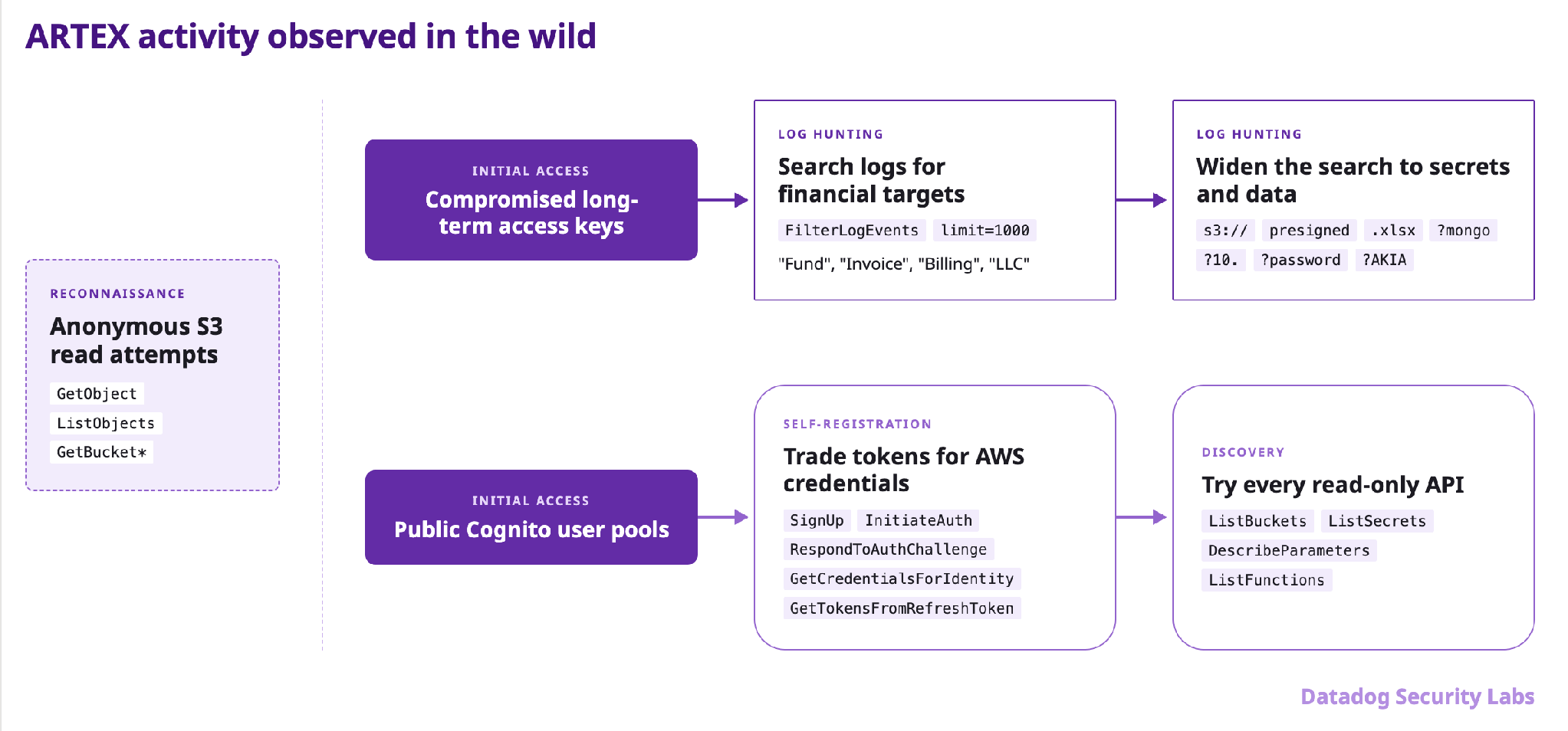
Check Point found ten misconfigured ARTEX instances exposing their databases and reconstructed three campaigns. One stole more than 300 iOS signing certificates at an estimated model cost of at most $1,500; three passed validation. Another pursued crypto theft for four days and reported successful exploits, but the TA’s wallet received no funds.
The alleged Seoul threat actors.
Seven arrests, 8.2 million records and more than 90 organizations, according to police reporting. Police say the alleged leader, a former pentester, breached 60 companies in 44 days. Press reports link the alleged operation to ARTEX.
Crafty Falcon.
India’s CERT-In associates this TA with attacks on lenders, fintechs and crypto exchanges, including unauthorized transfers through victims’ own payment APIs. The advisory lists ARTEX, PentAGI, CyberStrikeAI and Cairn, a separate AI framework that searches for a sequence of actions to reach a goal. It does not identify the tool used in each incident.
The TAs stealing LLM keys.
Amazon analyzed campaign records agents sent to its decoy LLM endpoints. It assesses with moderate confidence that the framework was ARTEX and that separate China-nexus groups operated it. One campaign’s records describe stealing LLM API keys to fund further key hunting. Another describes deepfake attempts against two crypto exchanges’ identity checks. According to those records, the exchanges rejected every attempt. Amazon could read what the agents claimed. It could not independently confirm what happened at the other organizations.
Unattributed application attacks.
Unit 42 observed agents registering accounts in a production application and reading about 50 MB of API data.
The research accident.
WorkOS reports that a researcher’s test agent accessed an internal sales tool without authorization, including CRM records, call summaries and Slack excerpts. A weak credential intended for local development had reached production.
What it looks like in your logs
Start with Malware Must Die’s ARTEX detection pack. Hendrik Adrian (RickGPT) developed the pack. Censys’ Brandon Levene highlighted it for detecting agentic pentesting behavior beyond ARTEX.
It includes Sigma, KQL, Suricata, Snort, YARA, osquery and STIX content, plus source references, test fixtures and tuning notes. Behavioral rules cover reconnaissance, webshell upload followed by execution, cloud enumeration and API retries that change after errors. Those patterns can help beyond one ARTEX version or fork.
Indicators of compromise (IOCs) can age quickly. TAs change infrastructure and rename markers; IP addresses can be reassigned. The pack labels specific markers, behavioral patterns, historical infrastructure and generic signals, and includes expiration dates. Use incident IOCs for historical searches and context. Do not automatically block on an old IP or generic tool signature alone.
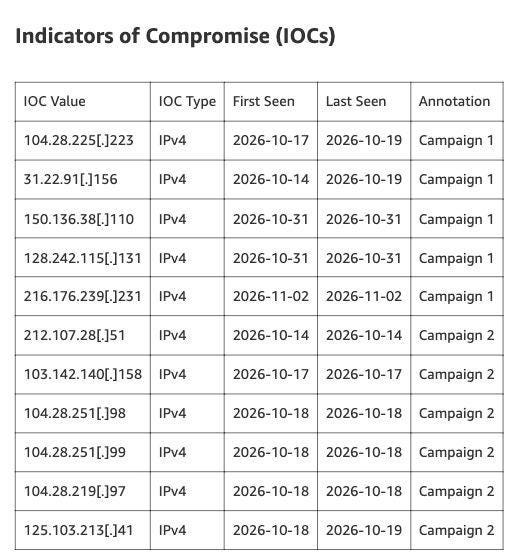
Read the validation and tuning notes: the maintainers mark additions as experimental. Check that the rule’s field names match your logs and that you collect the events it needs. Account for authorized testing and measure false positives before enabling response actions.
Theori provides another collection of rules and queries. Cisco Talos lists Snort coverage; some Norma policy rules are disabled by default. A rule match flags activity to investigate. Check who ran it, whether they had authorization and what access they gained.
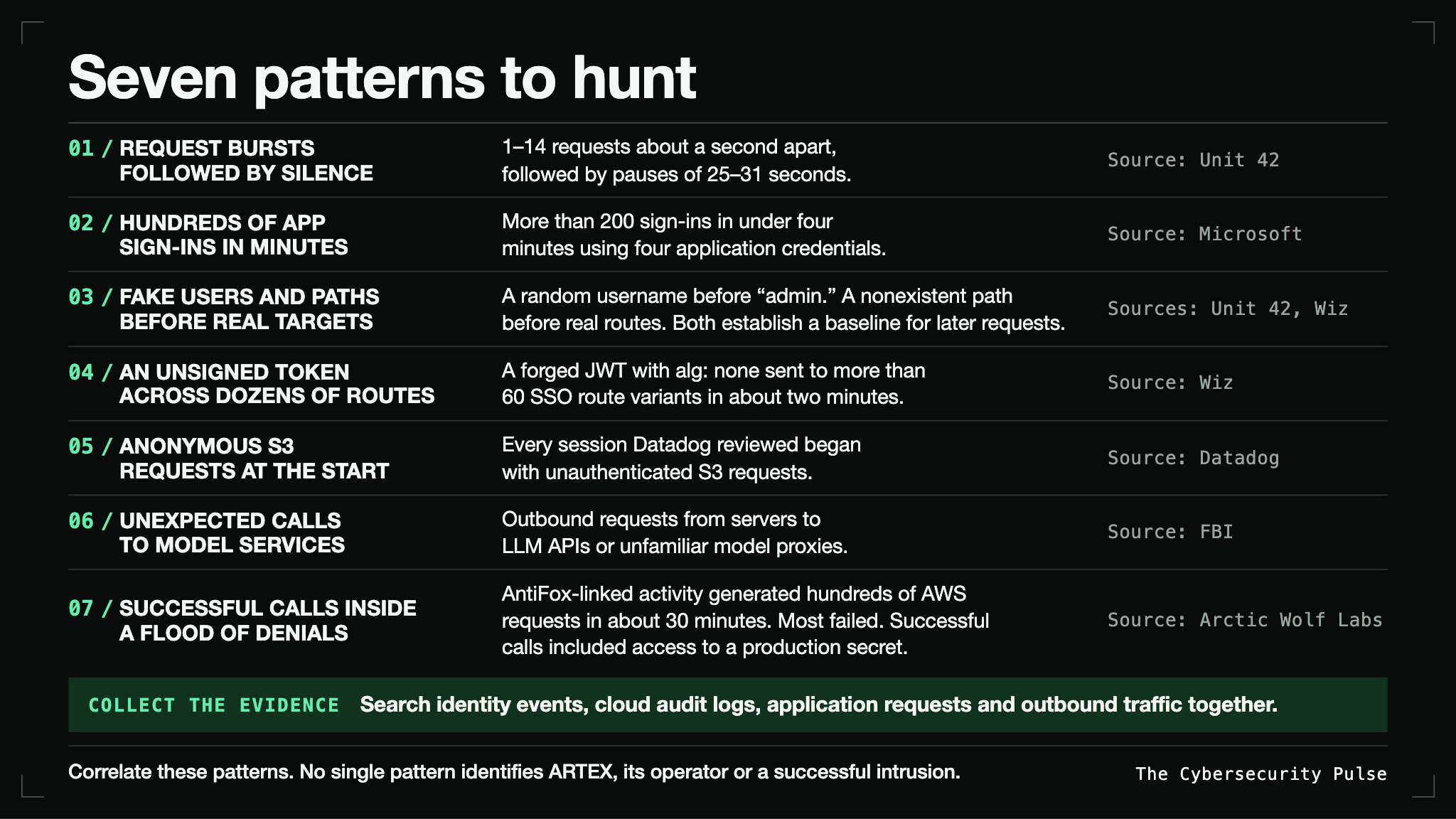
Researchers reported the following patterns:
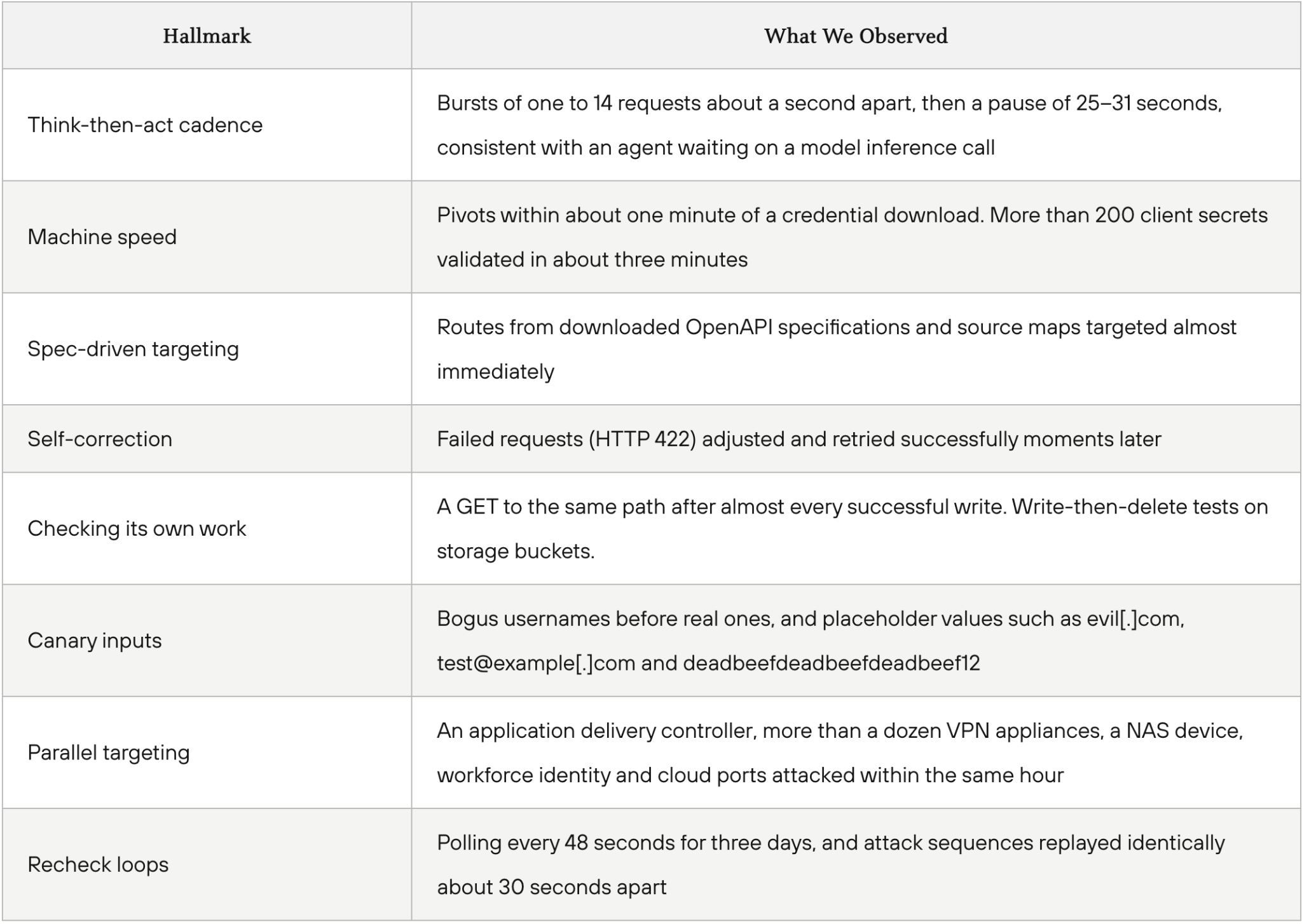
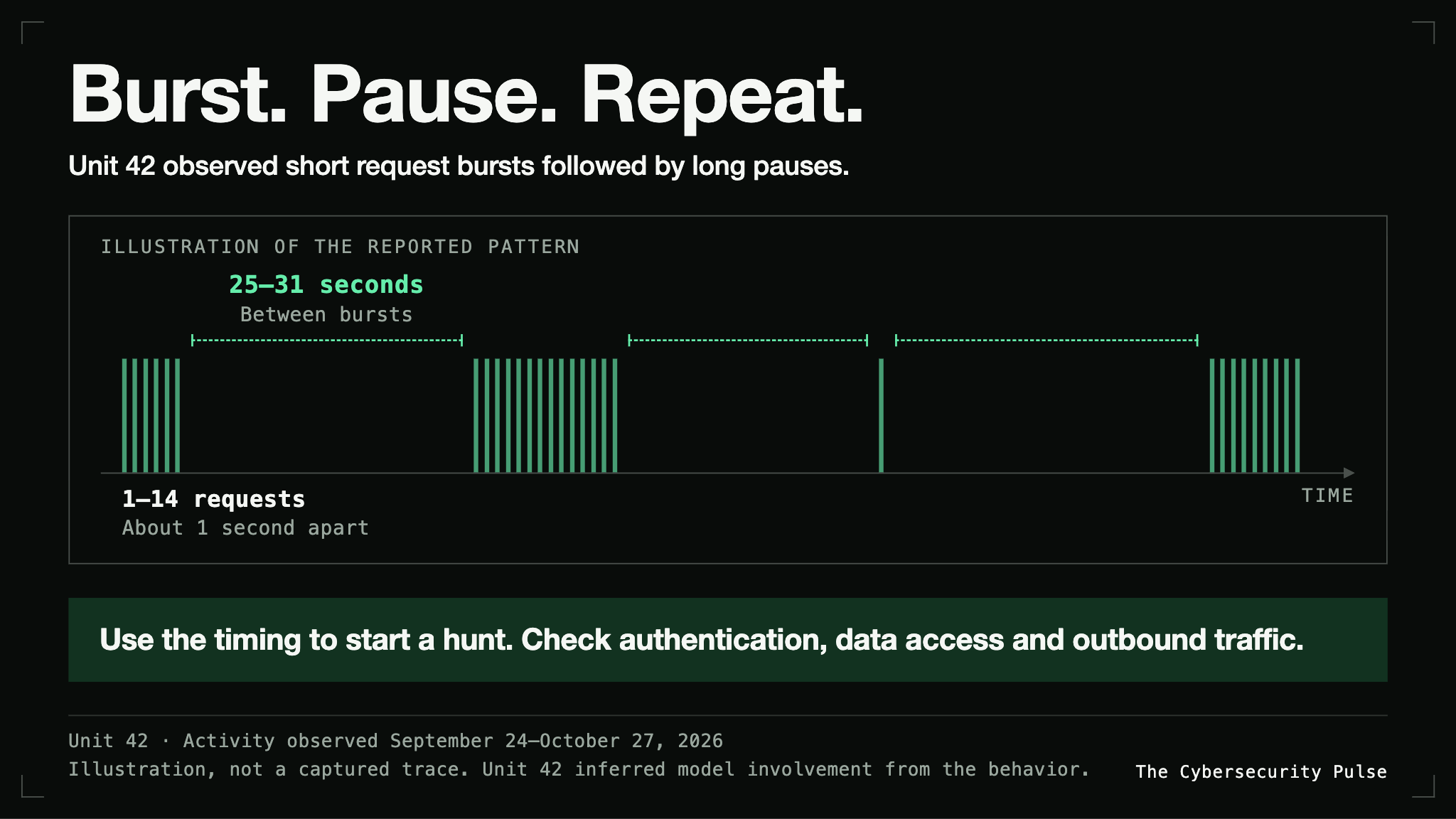
Repeated bursts and pauses. Unit 42 observed 1 to 14 requests, followed by a 25-to-31-second pause. That is one observed sequence, not a universal detection threshold.
Tests of how the application responds. A nonsense username followed by
admina second later; a request for a nonexistent path such as/zzzrandom12345to learn the application’s 404 response (Unit 42, Wiz).Rapid token and credential testing. More than 60 unsigned-JWT attempts against SSO routes in about two minutes (Wiz). More than 200 application sign-ins in under four minutes using four credentials (Microsoft).
Tool names in requests and artifacts. User agents such as
norma/0.4,artex-enrich/1.0andReconProbe/1.0(WorkOS, Wiz). Command lines, cloud roles and temporary files containingartx(CrowdStrike, Sophos). Cloudflare Workers with names beginningartex-(Cloudflare). TAs can change these strings.Unexpected outbound traffic. Servers calling LLM APIs they have no business reason to use, or sending output to rotating webhook.site URLs (FBI, Google).
Cloud enumeration and access attempts. Sessions beginning with unauthenticated S3 requests (Datadog). Large numbers of denied cloud calls, followed by a successful request. Investigate the success and what the identity did next.
Cost, noise and results
Cost. Check Point estimated $145 to $300 in model usage for a failed crypto-theft campaign and $700 to $1,500 for the certificate-theft campaign. Check Point calculated these estimates from model tokens and pricing. They cover model usage, not the full cost of running the campaigns.
Noise. DIVD counted more than 450,000 requests. Google describes tools prioritizing speed over stealth. High request volumes can make attacks easier to spot. Defenders still have to contain them in time.
Failed attempts. The agents Check Point observed sometimes treated an API’s success response as proof of a theft that had not occurred. Storm-0940’s 151,000-plus failed logons produced no successful authentication in that spray.

Human involvement. In two of Check Point’s three reconstructed campaigns, agents kept working without further human input after the TA set the opening goal. A human TA directing VAPOR PANDA’s campaign intervened.
Two counts need context:
Internet traffic: Cloudflare’s more-than-30x growth counts requests from the wider AI pentesting and exploitation category. It does not show 30x more breaches, or that every request came from ARTEX.
Exposed consoles: Censys counted 1,465 in early November, with about 650 in two groups of cloned hosts. Check Point’s report gives 1,800-plus in its opening and 1,608 live instances in its body. These counts measure exposed consoles. They do not tell us how many distinct TAs use ARTEX. Some consoles may belong to researchers, students or honeypot operators.
ARTEX is part of a larger ecosystem
The reports also cover these frameworks:
Cairn - an open-source system whose AI agents share findings and explore possible actions toward a goal. Its developers first evaluated it on pentesting. NorForge investigated criminal use and reported cost estimates for Cairn.
PentAGI - an autonomous multi-agent pentesting system. CERT-In includes it among the tools it identified in the financial-sector campaign.
CyberStrikeAI - an AI security-testing platform. Unit 42 counted 1,323 internet-facing hosts in October, compared with 609 running ARTEX.
HexStrike - an MCP server that lets AI agents run pentesting tools. Google/Mandiant reports encountering it, ARTEX and Cairn during incident response.
Sources: Cairn project documentation, PentAGI, Unit 42 and Google/Mandiant.
Cloudflare observed more than 50 framework families scanning customers in three days.
Check Point observed a TA switch from Anthropic’s Opus 5.5 to Chinese models after hitting guardrails.
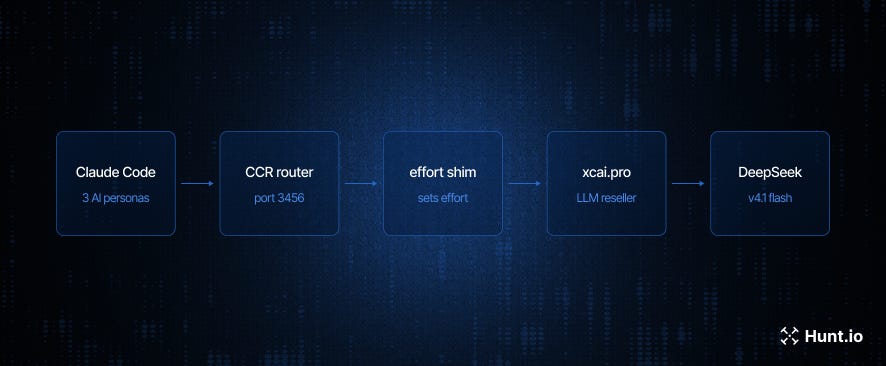
CrowdStrike and Zscaler found DeepSeek and other backends alongside Claude Code sessions. Hunt.io found a recovered Claude Code installation configured to route requests through a relay to DeepSeek. TAs can configure it to use DeepSeek or another provider’s model instead of Claude.
Where I land
The agentic offensive era is here. AI has democratized insane OffSec toolsets which is leading to what we see today. The TTPs haven’t changed but the speed and scale at which they happen has. Security teams have their hands full and we’re currently fighting an asymmetric war where TAs often have more firepower than blue teams. As long as teams are proactive, adopt deception techniques, and follow the guidance being issued by frontline folks, they should be somewhat resilient to attacks. HugOps to everyone dealing with the fallout from any of this! Hasta la proxima 🤙🏽
Sources
Government and CERTs: FBI FLASH-20261113-001 · CERT-EU · CERT-In CIAD-2026-0058 · Korea’s regulator count, via Herald Business (Korean) and Akamai
Microsoft: Storm-0940 and ConnectWise · North Korean actors · Exposed secrets · Storm-3358
Vendor research: Arctic Wolf on AntiFox · CrowdStrike on Korean finance and VAPOR PANDA · Google GTIG and Mandiant · Wiz · Unit 42 timely intel and full report · Check Point Research · Censys · Zscaler first and second reports · Recorded Future · Hunt.io · AhnLab · Datadog · Cisco Talos · Sophos X-Ops · Cloudflare · Amazon Threat Intelligence · GitGuardian · NorForge on Cairn · CTI Academy fork audit · ThreatBook’s RedAgents launch · Anthropic’s 2025 disclosure
Victims, police and press: WorkOS · DIVD incident updates, with additional reporting from BleepingComputer and Help Net Security · Seoul police, via BleepingComputer and Decrypt · Reuters on Cairn · CyberScoop · Korea JoongAng Daily
Detection repos: Malware Must Die pack and release notes · Theori · Cisco Talos coverage
Further reading: Simbian lab test · Honeypot study · CSA Labs on a backdoored ARTEX image · NIST CAISI model assessment · Epoch AI consumer survey
Project history and architecture: Autumn-27 statement and profile · Preserved ARTEX code · English fork documentation · AntiFox lineage · Cairn project · PentAGI project