

Welcome to The Cybersecurity Pulse (TCP)! I’m Darwin Salazar, Head of Growth at Monad and former detection engineer at Datadog. Each week, I bring you the latest security innovation and industry news. Subscribe to receive weekly updates! 📧
Howdy from CyberMarketingCon in Austin🤠! It’s been a great week acquiring more GTM tradecraft and hanging out with friends. I’ll probably have a write-up on it next wk! Also, we’re hosting TCP & Friends dinner tonight + a nightcap. We’ve got a few seats left and you can request a spot here!
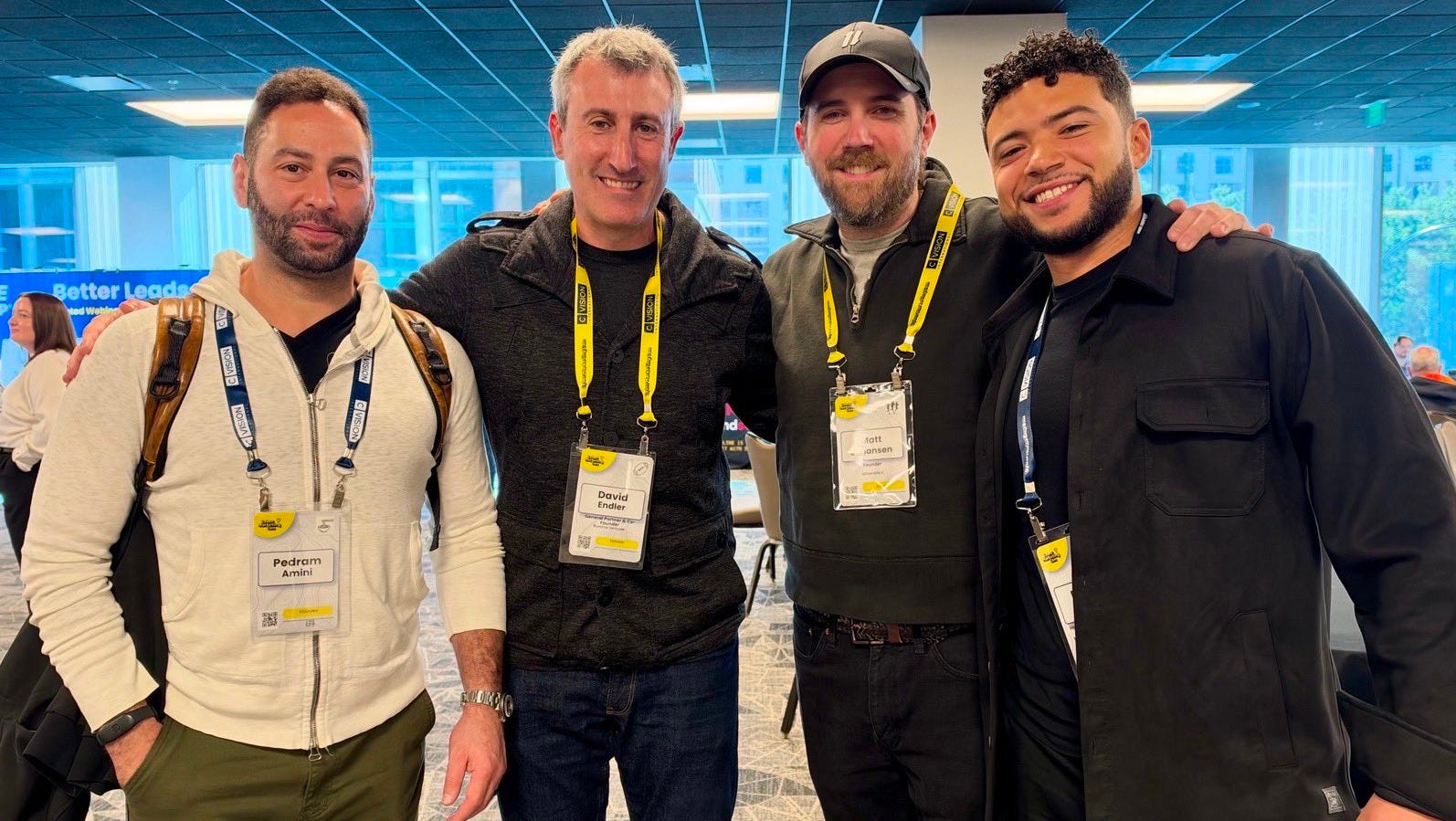
Also, I’m officially back on X/Twitter, it’s still the best place for InfoSec. My handle is @darwnsm, follow me if you’re on there! And here’s a shot from the con w/ some of the Austin Security founder fam:
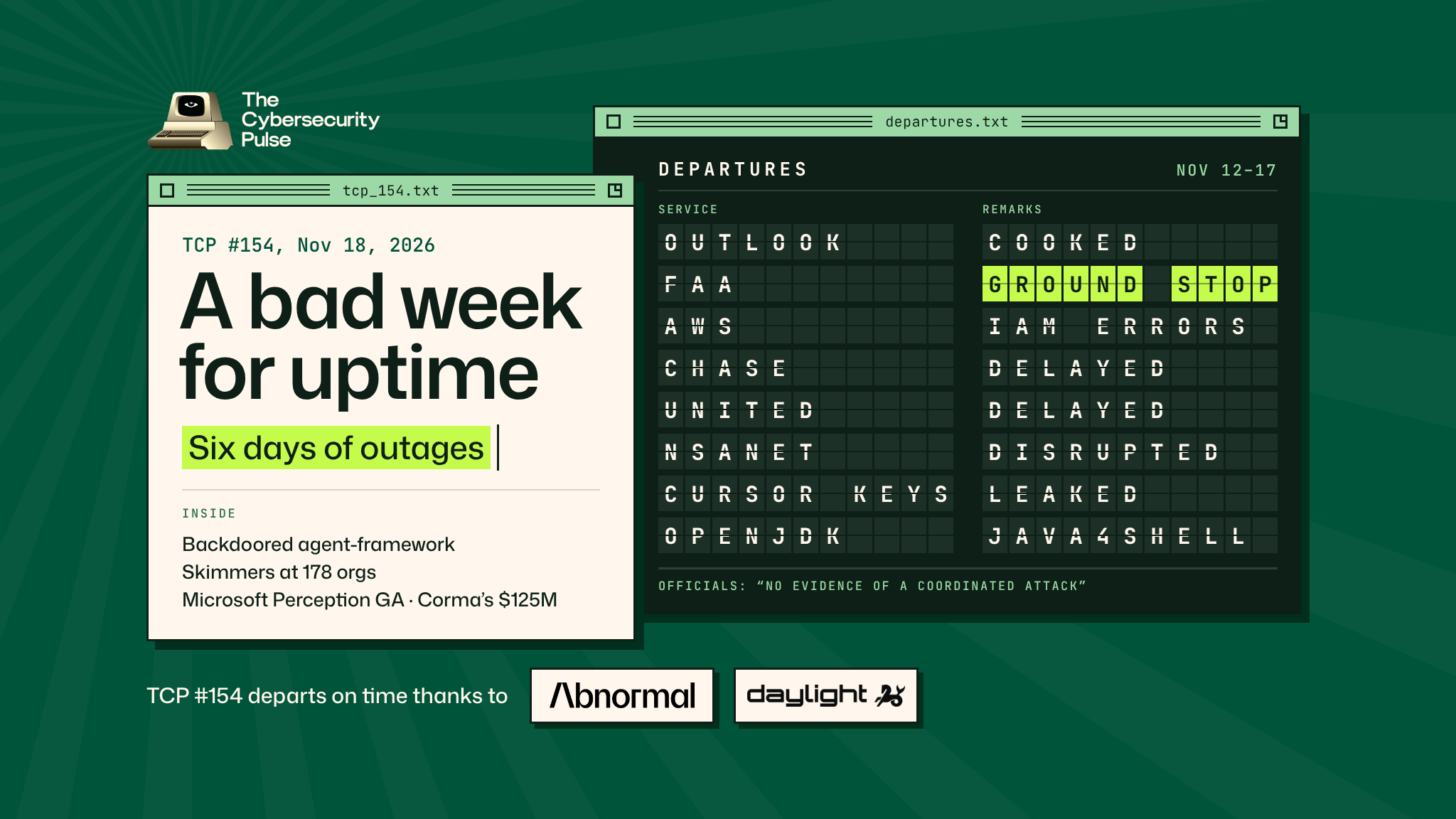
Back in the world of the cybers, shit got weird. Outlook had a full-day global outage, the FAA halted all departures for 4+ hours, and Chase bank, BofA, Zelle, AWS, each had their own woes. Even the NSA had network trouble. Coincidence? maybe. More on that in coming sections!
Thanks to Abnormal AI and Daylight Security for supporting this issue. Let’s get into it!
Inside ZeroTokens: When Phishing Has a Human at the Controls
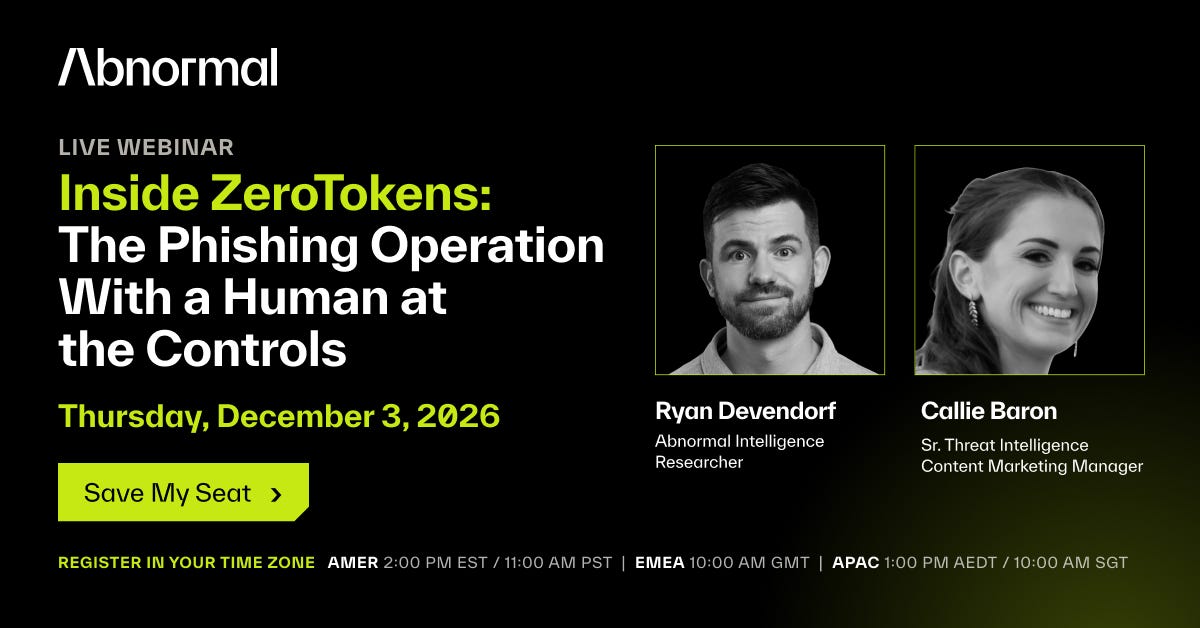
What happens when a live attacker decides what you see next? ZeroTokens operators adapt each phishing session in real time to capture passwords, verification codes, and sensitive data.
Join Abnormal AI on December 3 to go inside the operation, understand the risks to MFA, and learn which signals help expose the attack. Choose from three global sessions to find the time that works for you.
📚 TLDR
🛫 Outlook, AWS, and banks: The FAA halted departures nationwide, and Chase’s software bug could delay transfers with BofA.
💳 Hijacked Optimizely scripts: 178 organizations’ sites served skimmers and iOS exploits.
📦 Backdoored Microsoft package: Two PyPI releases targeted Azure and CI tokens.
☕ Java4Shell in OpenJDK: Calif demonstrated RCE in Jenkins and Jira on certain x86 servers.
🗝️ Fireworks to Cursor: Secrets in agent traces led to a malicious Claude Code extension.
🎣 Abnormal AI on ZeroTokens: Operators change phishing prompts mid-session to capture MFA codes Catch the December 3 webinar for a deep dive🔥
💵 Pretxt exits stealth: Two AppOmni veterans raised $5M to supervise AI agents.
📡 OX Security’s Radar and Response Center track new advisories and show which assets are affected
🧭 Perception goes GA at Ignite: Red agents test defenses, blue agents investigate threats, and green agents coordinate fixes.
Plus: What responders saw in AI intrusions · A worm in remote support · More casework in one SOC console · A podcast on baiting AI attackers
🔥 Picks of the Week
Six days of outages, from Outlook to a nationwide ground stop
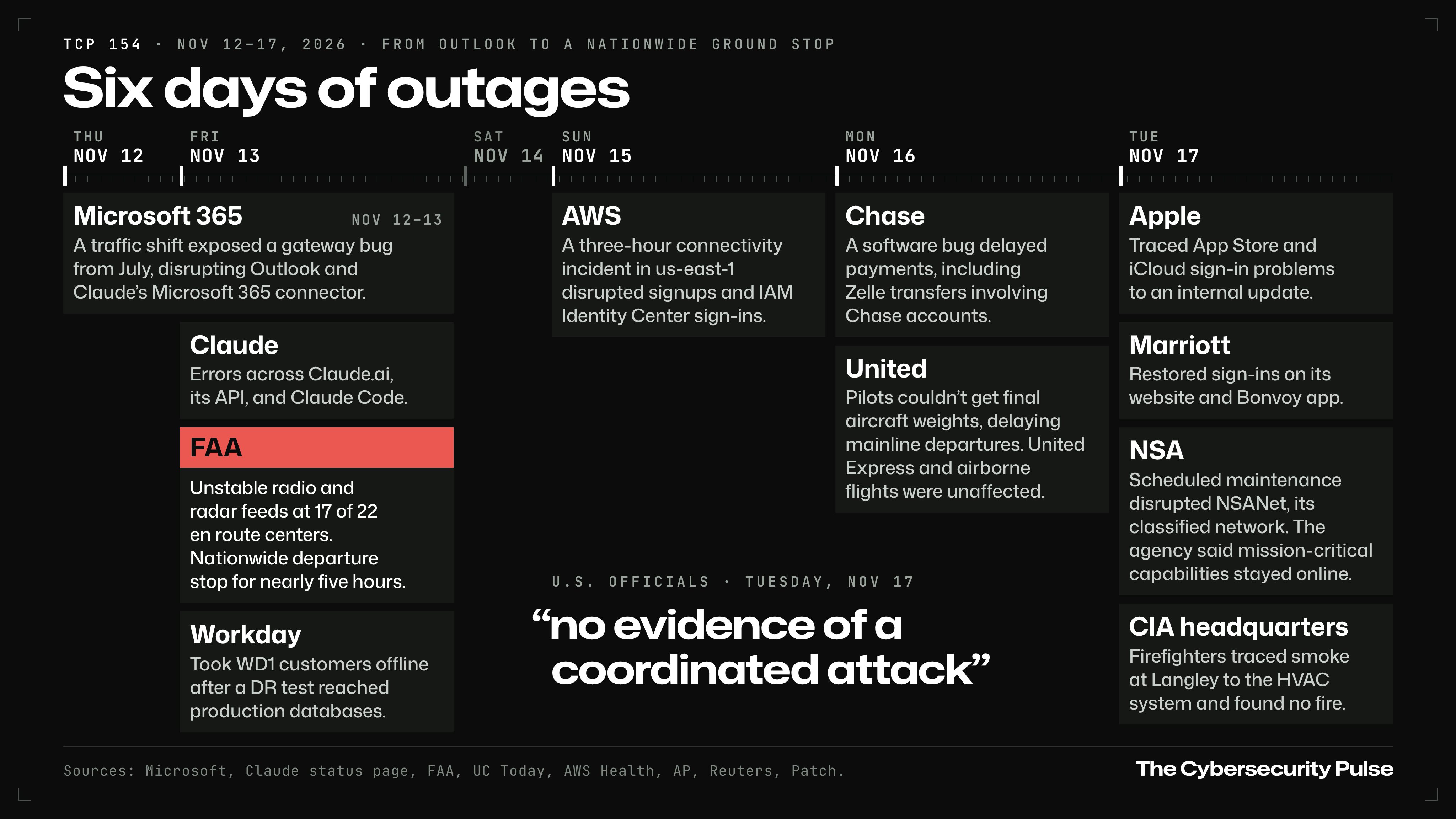
So, it’s been quite the week, month, and year. We went from PHP2Shell, to Fireworks breach, to outages across major global services. Is it all connected? or is it all a coincidence? If it were all connected to an attack of sorts would US officials tell us? What if it were autonomous remediation and the patch race that is bringing services down? Truth is that we may never know the truth. Security through obfuscation is a real thing.
U.S. officials have found no evidence of a coordinated attack.
Your SOC, 10x better. Without hiring 10x.

Daylight’s AI agents investigate threats and respond in your environment. Security engineers guide the agents and improve how they handle each case.
Choose a fully managed, co-managed, or forward-deployed team. Daylight says it detects threats in seconds, contains them in minutes, and delivers outcomes up to 10x faster than traditional security providers.
Outage timeline
Nov 12–13 · A Teams failover triggered a July bug on Exchange gateways. Redirected traffic overloaded healthy gateways, disrupting Outlook and Claude’s Microsoft 365 connector.
Nov 13 · Excess connection requests disrupted radar and radio at 17 of 22 en route centers. Isolating two sites helped end the nearly five-hour nationwide ground stop. The FAA paused Juniper router installations Tuesday pending tests.
Nov 13 · A Workday recovery test reached production databases, forcing WD1 customers offline. Claude reported separate API and Code errors.
Nov 15 · AWS IAM Identity Center errors blocked some console, Kiro, and Connect logins in us-east-1. AWS didn’t say why.
Nov 16 · A Chase software bug slowed payments. Bank of America and Citi customers could see delays on transfers involving Chase. Both banks and Zelle stayed online.
Nov 16 · A web outage left United pilots without final takeoff weights and delayed mainline departures, their union said.
Nov 17 · An Apple update disrupted the App Store and iCloud sign-ins. Marriott restored Bonvoy logins.
Nov 17 · NSA maintenance disrupted its classified network, NSANet. Critical operations continued.
Nov 17 · At CIA headquarters in Langley, firefighters traced smoke to HVAC equipment and found no fire.
Sites at 178 organizations served malicious Optimizely scripts
A signup flaw in Optimizely Web Experimentation let an attacker impersonate customer admins and change the A/B testing scripts their sites served. Report URI’s Scott Helme found 188 tampered scripts across 178 organizations, including the BBC, GitLab, and Zoom.
The script swapped crypto wallet addresses. Report URI traced about $7,040 to the attacker’s wallets by 19:25 UTC on November 16. It also found Coruna and DarkSword targeting older iOS versions. Cynet verified delivery in testing but couldn’t confirm a device infection.
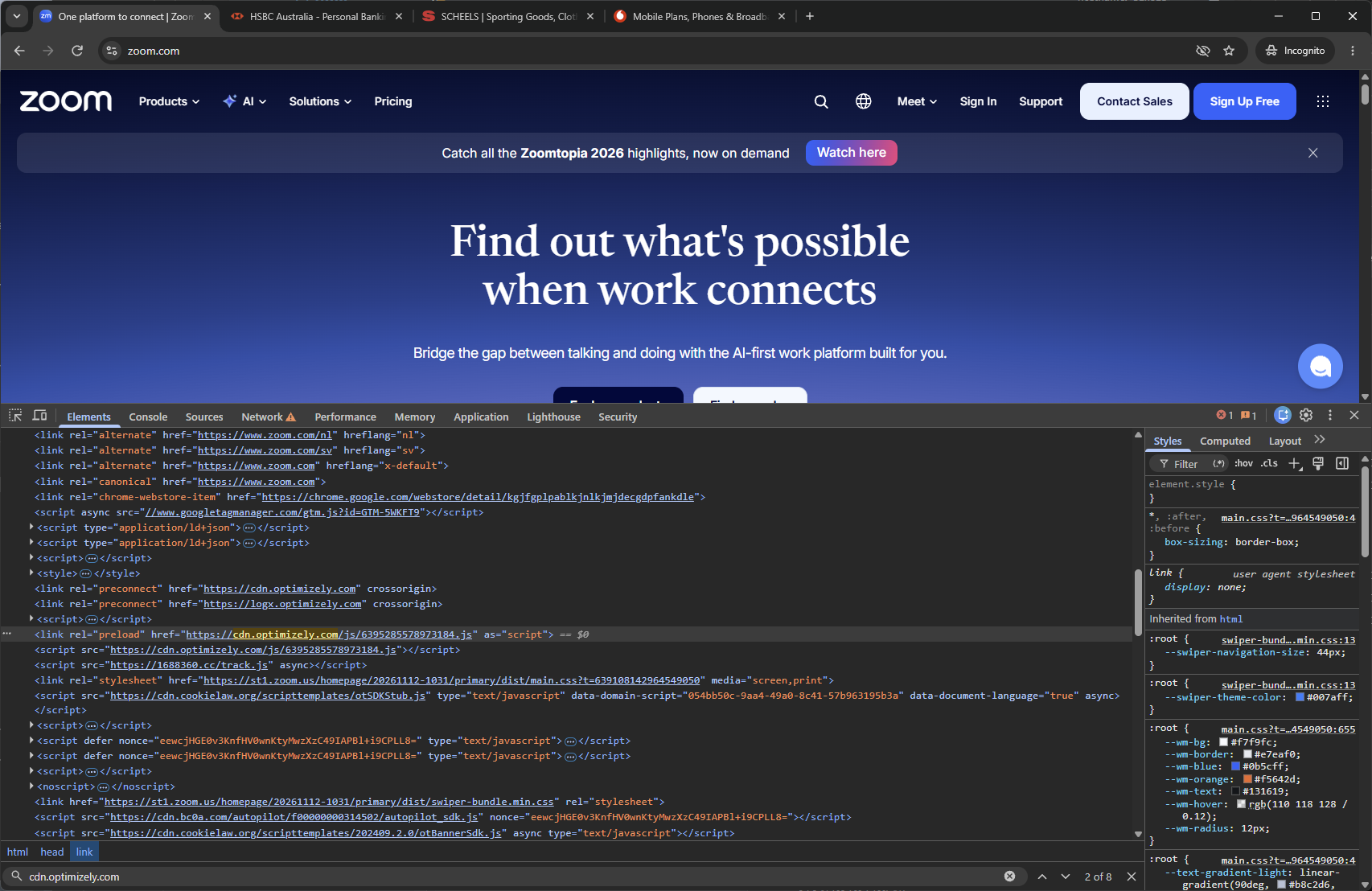
The skimmer could read card details entered directly on a page. A payment provider’s cross-origin iframe protected its fields. Optimizely’s overall window was 07:51 to 22:24 UTC on November 16. Customers can request exact times for their site.
Microsoft Perception goes GA at Ignite with red, blue, and green agents
Microsoft introduced Project Perception in July and announced general availability at Ignite on November 17. Its playbooks coordinate three teams of agents.
Red agents test defenses. The Recon Agent is GA. The Web App Pen Test Agent is in preview.
Blue agents triage alerts, investigate attacks, write detections, and analyze threat intelligence. All four are GA. One playbook tests proposed KQL rules against historical data before an analyst signs off.
Green agents prioritize exposures and coordinate fixes. The Posture Prioritization Agent is GA, and the Risk Reduction Agent is in public preview. Integrations with AWS, Okta, and Salesforce are also in preview.
A stolen Fireworks key put a tampered Claude Code extension in Cursor’s marketplace
Cursor says an attacker used a key it had issued to Fireworks AI to copy stored coding-agent traces. Most dated to 2025, and all came from sessions outside Privacy Mode. The attacker used credentials in those traces to reach Cursor’s internal tools, then replaced two cached versions of the Claude Code extension in its marketplace. Cursor says up to 5,000 users could have received a tampered copy in an 11-hour window on October 29. The affected Windows and macOS versions were 2.1.312 and 2.1.313.
Cursor contacted affected users and team admins directly. Fireworks says the intrusions exposed account and billing information for accounts created before October 30. A smaller group also had datasets, model weights, or secrets exposed. Uber separately notified 149,346 people after stolen Fireworks credentials exposed driver data, including license numbers.
What responders saw in real ARTEX intrusions
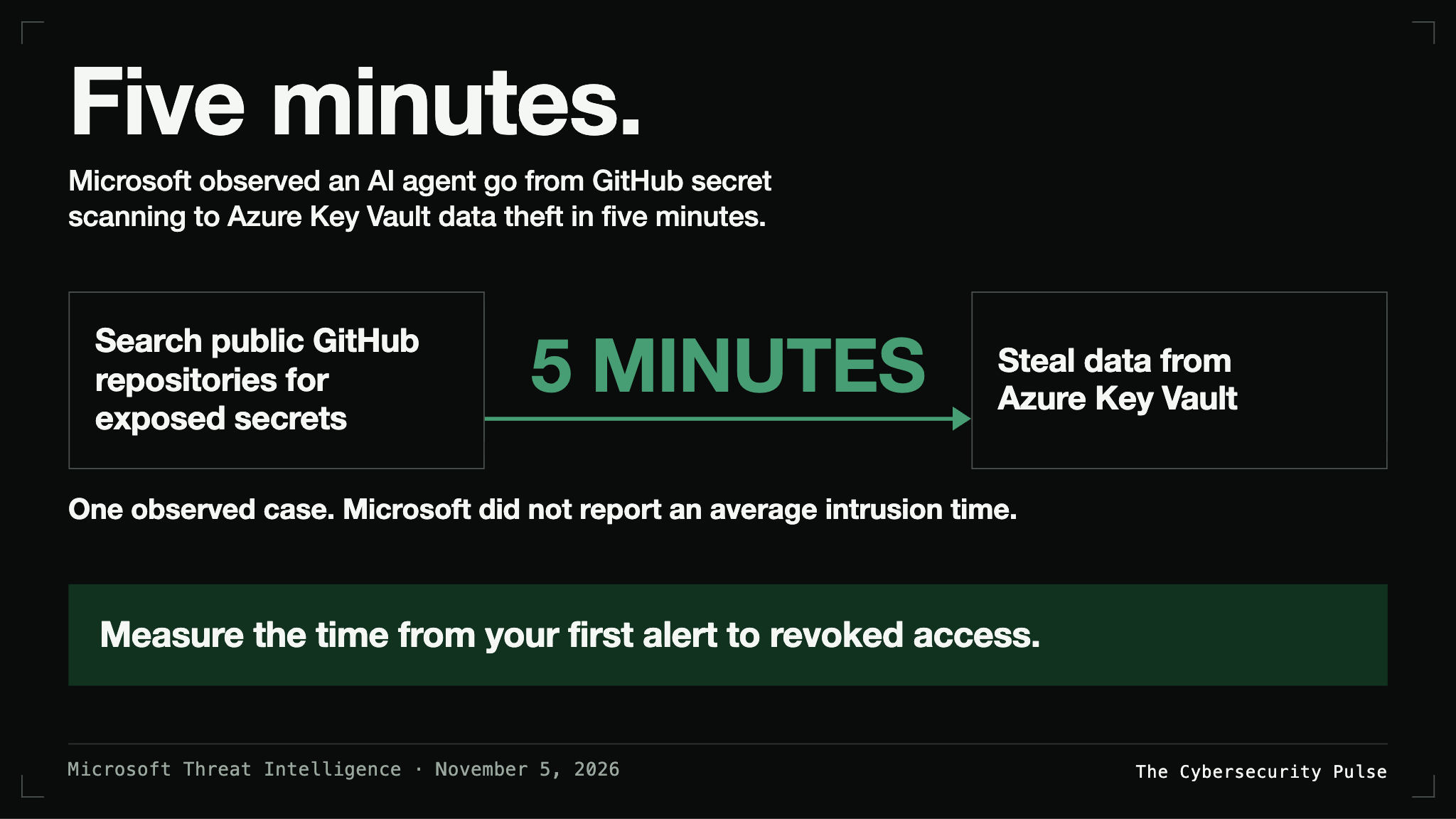
The FBI says attackers have used ARTEX, an open-source AI pentesting tool, since at least August. In some intrusions they went from initial targeting to privileged access in under three hours. In Monday’s ARTEX & Friends, I pulled together the timelines, the cloud and identity records responders saw, and the detection rules researchers published.
🚨 Threats & Research
Two releases of Microsoft’s agent-framework shipped a credential stealer
On November 17, attackers published versions 1.26.1 and 1.26.2 of Microsoft’s agent-framework on PyPI. The stealer ran when Python started, even if nobody imported the package. It targeted Azure and Azure DevOps credentials. The second release also requested GitHub Actions identity tokens.
Aikido found both releases off PyPI within about 45 minutes of the first upload. The GitHub advisory lists 1.26.0 as the last clean release. Build logs and package caches can identify affected CI runners. Endor Labs recommends rotating credentials those runners could access.
Java4Shell puts Jenkins and Jira at risk on certain x86 servers
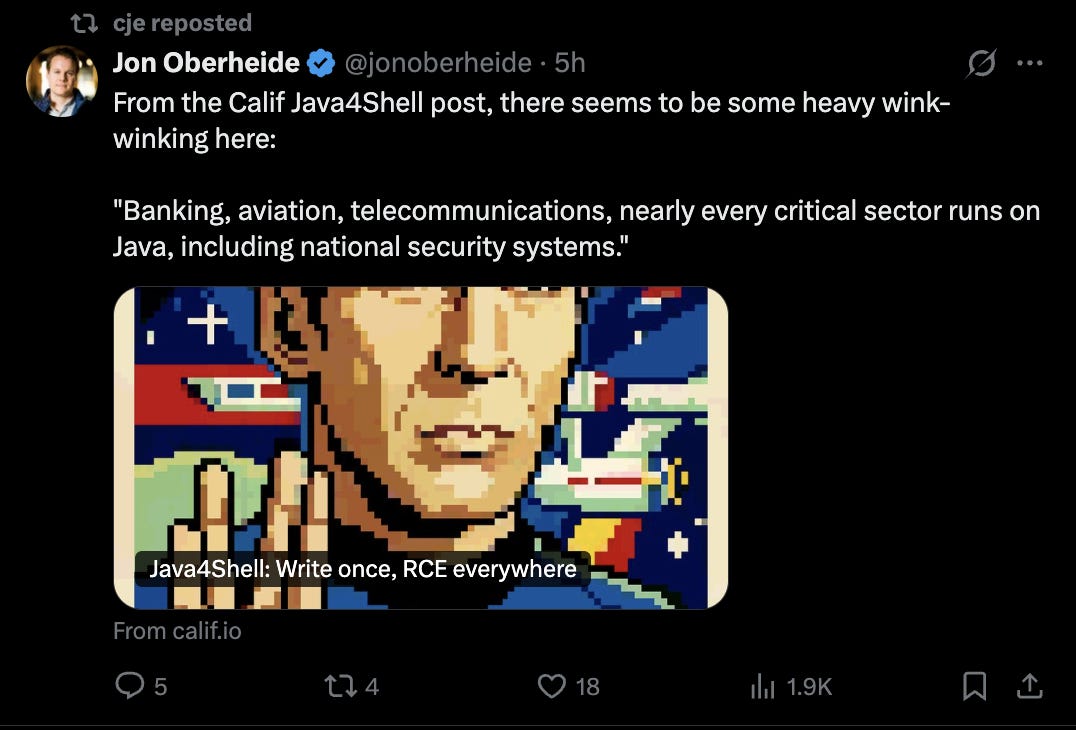
Calif demonstrated pre-auth RCE in Jenkins and Jira through Java4Shell (CVE-2026-114938), a bug in OpenJDK’s Base64 decoder on x86-64 CPUs with AVX-512 VBMI. Affected Java versions include 17 (starting at 17.0.6), 21, 25, and 27. CERT-EU’s November 18 advisory also lists Oracle’s Java 8 performance build, 8u511-perf. ARM64 uses a different path.
Oracle issued fixes November 17. CISA flags runtimes bundled inside apps and containers. Red Hat published a temporary workaround. As of November 18, Sophos knew of no public reports of exploitation in the wild.

SCKit can spread from a customer’s machine to its support technician
Huntress saw attackers abuse the RMM+ extension for ScreenConnect to install rogue remote-access clients on 288 endpoints across 48 organizations. Two days later, it saw another 205 hosts hit. SCKit can also spread back to a technician who connects to an infected device.
ConnectWise says version 26.6.5 or later of the technician client blocks that route. It shipped the client fix in September.
N-able removes the Legacy API used in N-central attacks
Last week N-able took hosted N-central offline. Since then, researchers found miners on 21 production servers, 19 already running Hotfix 2. The attacks depended on the optional Legacy API being enabled and exposed.
N-central 2026.4 Hotfix 3 permanently removes the API. N-able’s release notes say older Agents and Probes remain susceptible to impersonation even after the server is patched.
A GitHub Actions stealer took credentials from at least 1,835 repositories
Aikido found that 4,837 compromised GitHub accounts probed over 61,000 repositories. At least 1,835 repos actually ran the wfx-loot payload and leaked credentials. A pull request titled docs: dependency audit notes was the probe.
The stealer could change AWS role trust policies or add federated credentials to Microsoft Entra applications. Those changes can still grant access after the stolen credentials are rotated.
Google finds stolen data on a server running an AI attack tool
Google Threat Intelligence Group found stolen data on a server running an AI tool that targeted unpatched web apps. Logs on the server pointed to French media, entertainment, and education sites. Google didn’t name the organizations that lost data.
Arcanum tests whether decoys can sidetrack AI attackers
Jason Haddix’s team at Arcanum built SpikeStrip to see whether AI agents chase false leads in a website’s source code. The decoys are ordinary HTML and JavaScript comments. They don’t run code or send alerts. Arcanum describes it as an experiment.
🎧 Worth a listen. My buddy Sid Trivedi and his co-hosts had another friend of TCP, Snehal Antani, on Inside the Network. Snehal talks about building Horizon3.ai and why he’d put decoys in an AI attacker’s path.
🛠️ Security Products, Tools & Programs
OX Radar and Response Center check whether a new advisory affects you
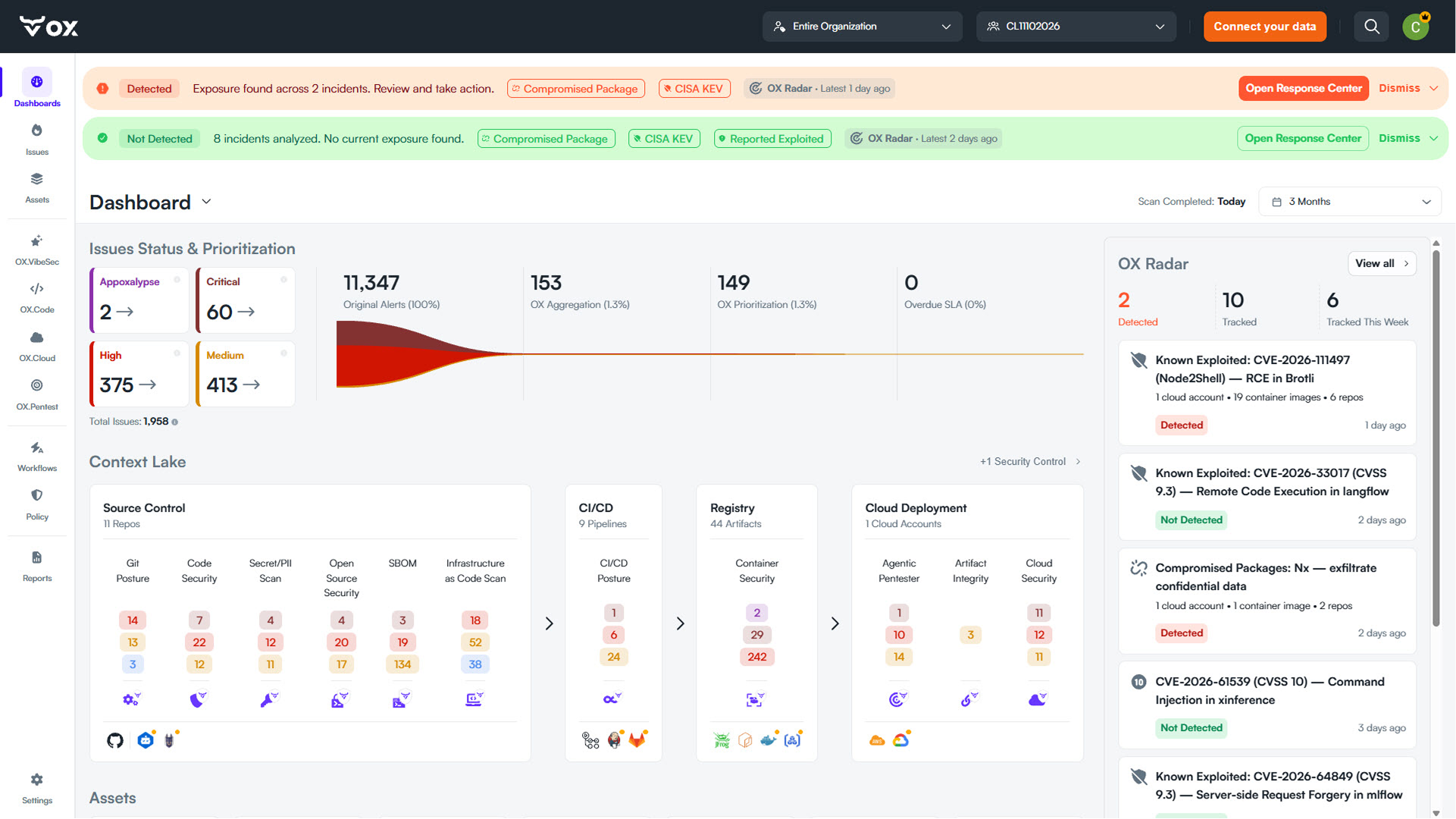
The Java4Shell advisory and two malicious releases of Microsoft’s agent-framework landed on the same day. That’s two rounds of “Are we running this anywhere?” for AppSec.
OX Security launched both tools today. Radar tracks new advisories. Response Center checks whether a supported threat affects your environment and shows the evidence behind its answer. A match can include affected assets, a safe package version, and a fix PR. I like the other result, too. It gives whoever’s answering in Slack something better than “probably fine.”
Very timely + necessary launch from the team! 🎯
Poppy 1.0 defines how personal agents sign in and get permission
The Personal Agent Protocol, also called Poppy, reached 1.0. A participating company publishes the APIs, pages, and agent interfaces it offers. A user can sign in through the company’s own OAuth flow and grant their personal agent specific permissions.
Signed-in browsing needs its own permission. A company can offer an API and keep agents out of its logged-in website, and either the user or the company can revoke access.
Microsoft brings case management and playbooks into Defender
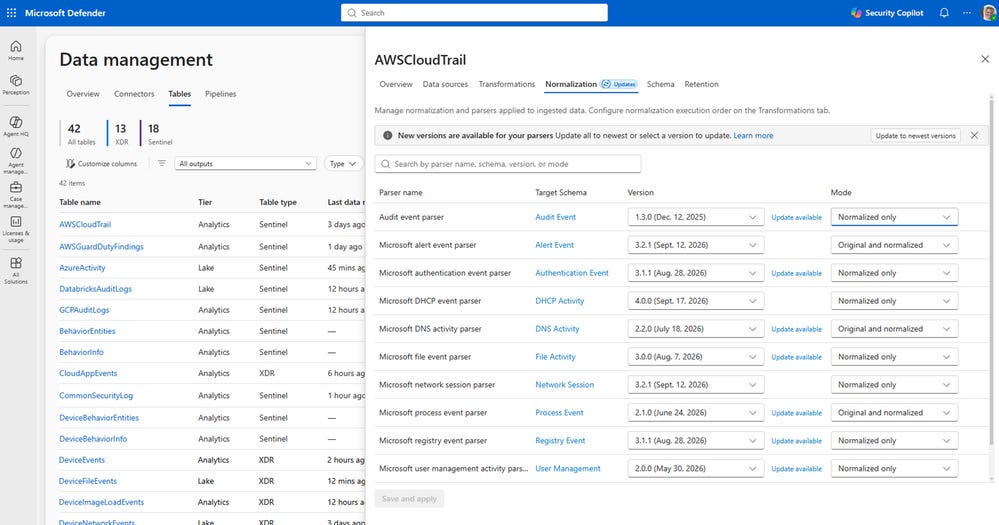
At Ignite, Microsoft made core features of its integrated SOC generally available in Defender. Analysts can now open cases, run playbooks, create workspaces, and bring in third-party logs there. Ninety-day retention for Defender data is in preview.
Project Zero sets a timetable for 30-day disclosure
Google Project Zero now publishes most bugs 90 days after it reports them to the vendor, even when a fix is still in progress. The default drops to 60 days on February 2, 2027, then 30 days on January 3, 2028.
The old policy allowed 30 extra days after a patch to give users time to install it. That window is gone from the default policy. Actively exploited bugs still follow a separate policy.
OpenAI pairs web app testing with code fixes in Daybreak
Daybreak Red Team tests authorized web apps and checks findings from scanners or bug bounty reports. It’s in early access by request. Daybreak Defense Factory takes a finding, traces it through a connected repository, and drafts a GitHub pull request.
Defense Factory is available in preview for workspaces with Daybreak access. Engineers can review and test the proposed change before merging it.
💰 Industry, Funding & M&A
AppOmni veterans launch Pretxt with $5M to supervise AI agents
Pretxt came out of stealth with a $5M seed and two familiar names from AppOmni. CEO Brian Soby co-founded AppOmni and served as CTO. Aaron Costello, now Pretxt’s CTO, led security research there.
A clinic bot is supposed to book your appointment. What happens when it starts giving medical advice? In Brian’s example, Pretxt checks the reply against the clinic’s rules and can steer the bot back to scheduling before the advice reaches the patient.
Backers include Deciens Capital, Howdy Partners, Service Provider Capital, and NSV Wolf Capital.
Truly a breath of fresh air to see a business-centric approach to AI governance, safety, and security. I’m cooking something up with the Pretxt team that will launch tomorrow. Keep an eye out for that!
Corma raises a $125M Series A for defensive security models
NEA led Corma’s Series A at a $1B valuation, three months after the company came out of stealth. Corma trains its own foundation models and uses them to carry out work inside customers’ existing security tools.
Corma says it will use the money to expand the compute capacity it needs to train and run those models.
Quorum Cyber closes its acquisition of Ontinue
Quorum Cyber completed its purchase of Ontinue on November 17, two months after signing the deal. Both run security operations for Microsoft customers. Ontinue brings managed detection and response. Quorum also handles incident response and threat intelligence.
Both brands will stay in place during integration. The companies plan to offer a combined set of services in early 2027. They didn’t disclose the price.
IBM buys AuthMind to see how credentials get used after Vault issues them
IBM acquired AuthMind, whose software maps which identities access which resources. IBM plans to bring that visibility into HashiCorp Vault so security teams can trace what a credential does after an app or agent receives it.
AuthMind builds its map from network traffic, which can also reveal agents nobody registered.
Finite State raises $27M to inspect what ships inside connected devices
Funds managed by The O.H.I.O. Fund led Finite State’s Series C. The company analyzes compiled firmware and software, including third-party components for which a manufacturer has no source code.
A device maker can compare the build manifest with what’s actually in the device, down to the libraries bundled into its firmware.

Cohere closes its AISLE deal and forms Cohere Cyber
AISLE confirmed the acquisition closed November 10. Its team now operates as Cohere Cyber, developing ways to find and fix vulnerabilities for enterprises and government customers, including those running in air-gapped environments.
Cohere also bought cubic, which reviews code changes for bugs and vulnerabilities. Its code-review tools support on-premises and air-gapped deployments.
Kindo raises $30M to manage agent access and spending
Crosspoint Capital and Forgepoint Capital co-led Kindo’s round. Its control center discovers agents already running inside a company and records which tools, models, and data they use.
Admins can audit an agent’s tool calls and cap model spending by employee, agent, or team.
Interested in sponsoring TCP?
Sponsoring TCP not only helps me continue to bring you the latest in security innovation, but it also connects you to a dedicated audience of 20,000+ CISOs, practitioners, founders, and investors across 135+ countries 🌎
Disclaimer
The insights, opinions, and analyses shared in The Cybersecurity Pulse are my own and do not represent the views or positions of my employer or any affiliated organizations. This newsletter is for informational purposes only and should not be construed as financial, legal, security, or investment advice.